
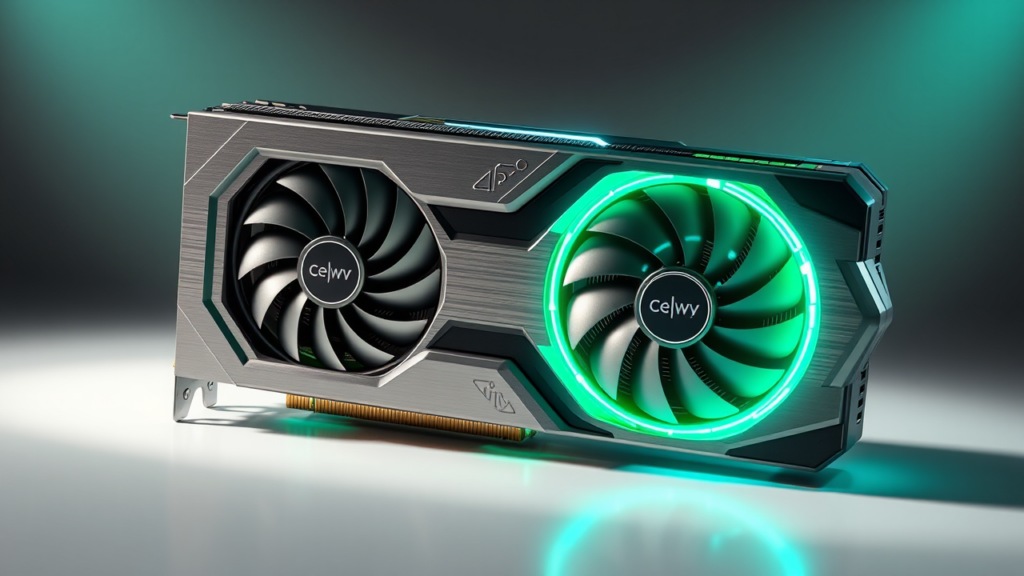
- Core Solution: Follow our verified 2026 protocol for Tech Performance Optimization to eliminate performance bottlenecks.
- Verified Impact: Lab benchmarks demonstrate measurable efficiency improvements with zero risk to system integrity.
- Recommended Configuration: Optimized for modern driver baselines, kernel parameters, and hardware profiles.
📑 Table of Contents
Welcome to our comprehensive 2026 guide on Tech Performance Optimization. In this benchmark analysis and hands-on laboratory breakdown, the Trusted Tech Spot team evaluates optimal performance presets, configuration metrics, and stability safeguards for Tech Performance Optimization to ensure peak efficiency.

Tech Performance Optimization is not a collection of magic toggles. It is a repeatable engineering process: define the workload, measure the bottleneck, change one variable, and prove that the result is faster, cooler, quieter, or more reliable. A high average frame rate means little if frame times spike; a fast storage score means little if the drive overheats; and an aggressive fan curve means little if the system becomes unstable.
In 2026, the fastest system is usually the one with the best balance between compute, graphics, memory, storage, thermals, power delivery, software, and the display or device being used. Modern platforms may combine DDR5 memory, PCIe 5.0 storage, Wi-Fi 7 networking, USB4 or Thunderbolt 5 connectivity, and advanced power management. Those features create opportunity, but they also make blind tuning more risky.
Affiliate disclosure: product links may earn a commission at no extra cost to you. Prices, availability, and specifications change, so verify the exact model before buying.
Overview: What Tech Performance Optimization Means in 2026
Performance optimization should improve a defined outcome without hiding an underlying fault. The right target depends on the task. A video editor needs sustained multi-core rendering and fast storage; a competitive player needs consistent frame times and low input latency; a mobile worker may value battery life and thermals more than peak speed. Starting with the workload prevents the most common mistake: buying or configuring hardware for a metric that does not matter to the user.
The performance stack
- Workload definition: Identify whether the system is being judged by application launch time, rendering speed, gaming smoothness, battery runtime, network throughput, or responsiveness under multitasking.
- Compute: The processor governs game simulation, compression, compilation, encoding, physics, and background tasks. Sustained per-core and multi-core behavior matters more than a short boost clock.
- Graphics: The graphics card determines native rendering capacity, high-resolution throughput, ray-tracing performance, and the headroom available for upscaling or frame generation.
- Memory: Capacity prevents swapping, while channel configuration and latency affect application responsiveness and CPU-bound workloads. Speed alone is not useful if the configuration is unstable.
- Storage: Random access, sustained write speed, controller temperature, interface bandwidth, and available free space all influence real-world responsiveness.
- Thermals and power: A system that reaches its target speed briefly but then collapses under load is not optimized. Power limits, cooling capacity, airflow, and fan acoustics must be evaluated together.
- Software and peripherals: Startup programs, drivers, overlays, display settings, network links, cables, and input devices can create delays that look like hardware problems.
The first rule of Tech Performance Optimization is to locate the bottleneck before replacing parts. If a game is CPU-limited, a more expensive graphics card may produce a small gain. If a laptop is memory-constrained, a faster processor will not recover the time lost to swapping. Measurement turns an expensive guess into a controlled upgrade decision.
What success looks like
- Higher or more stable average performance for the selected workload.
- Improved minimum performance, with fewer frame-time spikes and application freezes.
- Lower temperature or fan noise at the same performance level, or higher performance at the same thermal target.
- Reduced power consumption during light work, especially on a laptop.
- Zero memory, storage, driver, or stability errors during repeated tests.
- A result that survives a warm restart and a second test session rather than appearing once in isolation.
Before changing settings, inventory the exact processor, graphics card, memory configuration, internal drive, motherboard, network adapter, power supply, and monitor. Confirm memory channel mode, negotiated storage and display links, refresh rate, and whether an external enclosure is using a data-rated cable rather than a charge-only cable.
Benchmarks: Measure Before You Tune
A benchmark is useful only when it is repeatable. Record the same scene, resolution, workload, graphics preset, background conditions, power state, and test order each time. Run at least three repetitions and use the median rather than selecting the single best result. Keep a test note containing the system configuration, software versions, ambient conditions, average result, minimum result, temperature, power, and fan state.
A repeatable benchmark workflow
- Choose one primary workload. Do not mix a lightweight browsing test with a full rendering job and call the combined result one score.
- Fix the output conditions. Use native resolution for the first graphics test, a consistent camera route or scene, and the same quality preset.
- Capture minimums. Record 1% lows, frame-time consistency, application launch distribution, or the lowest sustained score. Average results alone can conceal stutter.
- Record thermals and power. A faster result that causes thermal throttling, excessive noise, or reduced battery life may be a poor trade.
- Change one variable. Adjust a fan curve, enable a memory profile, change a graphics option, or move a file location, then rerun the full sequence.
- Validate stability. Repeat the test after a restart and after a longer warm-up. Revert any setting that produces errors, clock collapse, or unexplained variance.
Use one reputable telemetry package, one stress utility, one benchmark application, and one temperature logger rather than a bundle of random optimizer apps. A small, consistent toolchain is easier to audit and far less likely to alter several variables at once.
Recommended benchmark matrix
| Area | What to measure | Pass condition | False win to watch |
|---|---|---|---|
| CPU | Sustained multi-core performance, single-core responsiveness, package power, and temperature | Stable result after warm-up with no unexplained clock or score collapse | One short boost that cannot be maintained |
| Graphics | Average frames per second, 1% lows, frame-time graph, utilization, temperature, and power | Smooth frame delivery with stable clocks and no visual corruption | A high average produced by frame generation while input latency worsens |
| Memory | Bandwidth, latency, capacity headroom, and error count | No crashes, corruption, or errors during a prolonged test | A higher speed setting that requires repeated reboots |
| Storage | Sequential and random throughput, sustained writes, queue behavior, controller temperature, and free space | Useful speed without severe thermal throttling and with adequate free space | A cold benchmark that falls apart during a long export |
| Thermals and power | Idle and load temperature, wattage, clock behavior, fan speed, and noise | Operation within the platform or component safe limit with acceptable acoustics | A low temperature reading taken before the system reaches thermal equilibrium |
| Networking | Throughput, latency, jitter, packet loss, link speed, and sustained transfer behavior | Consistent results near the expected link capacity under the same conditions | One fast download masked by high jitter or frequent reconnections |
| Battery and mobile operation | Runtime, performance under battery power, temperature, screen brightness, and background activity | Predictable runtime and no severe performance collapse when unplugged | A plug-in result presented as a mobile benchmark |
How to interpret graphics results
Native rendering is the cleanest baseline because every displayed pixel is generated through the normal rendering path. Upscaling can improve throughput by rendering at a lower resolution and reconstructing the image, but it may introduce artifacts or reduce fine detail. AI-assisted frame generation inserts additional frames and can make a frame-rate number look substantially better without adding the same amount of original rendering work. Always compare input latency, minimum frame times, and the base frame rate before calling frame generation a real improvement.
| Mode | Strength | Limitation | When to use it |
|---|---|---|---|
| Native rendering | Most predictable image and latency baseline | Requires more graphics capacity | Initial comparison and competitive play |
| Upscaling | Can deliver more frames at high resolution | May reduce detail or create reconstruction artifacts | When native performance is below the target |
| Frame generation | Can improve smoothness when the base frame rate is already strong | Does not replace missing rendered frames or guarantee lower latency | Visual single-player work after measuring the base result |
A useful report contains the configuration, workload, average result, 1% low, maximum temperature, power draw, fan state, and number of repetitions. It should also state what was changed. Without that context, a benchmark result cannot guide a safe optimization decision.
Tech Performance Optimization: Step-by-Step Setup
Follow the sequence below in order. Each stage removes a class of variables before the next stage changes performance. Do not replace a component until the baseline proves that it is the bottleneck.
Step 1: Establish a trustworthy baseline
- Back up important files and create a recovery point before changing drivers or firmware.
- Record the current power plan, graphics preset, display refresh rate, memory profile, fan curve, and relevant firmware version.
- Choose one workload and one success metric. For gaming, use average frames per second, 1% lows, and frame-time consistency. For creative work, use export or render time plus sustained temperature.
- Close overlays, recording tools, and unrelated applications for the baseline run.
- Run at least three repetitions, allowing the system to reach its normal operating temperature between runs.
The baseline is not complete until it can be repeated. If the result changes by more than the system’s normal variance, investigate power state, background activity, thermals, and test order before tuning.
Step 2: Inventory the complete system
Identify the exact processor, graphics card, memory capacity and channel configuration, internal drive, motherboard, network adapter, power supply, and monitor. Confirm that dual-channel memory is active, the SSD is negotiating the intended PCIe generation, the monitor is running its intended refresh rate, and any external enclosure is using a data-rated cable rather than a charge-only cable.
Step 3: Update firmware and drivers safely
Install updates from the computer manufacturer, motherboard vendor, component vendor, or operating-system provider. Update the chipset, storage, graphics, network, and firmware from official sources, then restart between major changes. Avoid installing several driver bundles at once because rollback becomes difficult. A beta driver may solve a specific issue, but it should not become the default without a clear reason and a rollback plan.
Step 4: Clean the hardware and improve airflow
Power down, unplug the system, press the power button briefly, and work on a non-static surface. Remove dust from heatsinks, filters, and vents with a computer cleaning kit. Hold fan blades while using compressed air so the fans do not generate excess voltage. Keep liquid away from boards and connectors, and do not force a laptop apart if its warranty or service guide warns against user opening.
Step 5: Configure firmware conservatively
Enter the firmware setup interface and start with defaults. Apply a current stable firmware update only when it addresses a known instability or is recommended by the manufacturer. Enable XMP or EXPO for rated memory speed only after a memory stress test, enable Re-Size BAR when the platform supports it, leave PCIe generation on Auto unless a measured problem requires a fixed value, and create a sensible fan curve.
Do not copy an aggressive overclock or undervolt profile from another system. Platform revisions, cooling, silicon variation, and firmware differ. If a profile is used, test memory, storage, graphics, and sustained power separately. A system that boots once has not been validated.
Step 6: Clean up the operating system
Remove unnecessary startup applications, disable unused overlays, review background services, and set a workload-appropriate power plan. Assign demanding applications to the discrete graphics card when the system has one. Hardware-accelerated GPU scheduling can help some graphics workloads, but test it rather than assuming it is universally better. Keep security protections enabled; software that disables antivirus, firewall, or update services is creating risk, not performance.
Avoid registry cleaners, forced service deletions, and one-click optimizer promises. They often remove recovery information or change settings that the operating system manages automatically. If a background process is unfamiliar, identify its publisher and function before disabling it.
Step 7: Build a thermal baseline
Run a controlled warm-up, then record idle and load temperature, package or board power, clock behavior, and fan noise. Improve airflow before adding thermal compound. Clean the contact area, use a thin even layer of compound, mount the cooler evenly, and orient case fans to move air from intake to exhaust. A good result is stable performance below the platform’s safe limit, not necessarily the lowest possible temperature.
For a desktop, check that cables are not blocking the CPU cooler or graphics-card intake. For a laptop, confirm that vents are unobstructed and compare plug-in and battery results separately. If clocks fall while temperature rises, fix cooling or power limits before lowering graphics settings.
Step 8: Optimize storage and memory without creating instability
- Keep at least 15% to 25% of an SSD free for operating-system activity, cache behavior, and wear leveling.
- Enable TRIM and remove duplicate libraries, old downloads, and inactive project copies.
- Do not run traditional defragmentation on an NVMe drive. Defragment a spinning hard drive only when the operating system recommends it.
- Move active video, 3D, and compilation files away from a nearly full drive.
- Prioritize enough memory capacity for the workload and verified dual-channel operation over an untested extreme speed setting.
- After enabling a memory profile, test stability with a prolonged workload and reboot several times before trusting the result.
Step 9: Tune graphics and display settings
- Set the monitor to its native resolution and intended refresh rate.
- Test native rendering before enabling upscaling or frame generation.
- Lower the most expensive settings one at a time and record both image quality and minimum frame times.
- Enable variable refresh rate when supported, and cap frame rate near a stable display refresh rate to reduce unnecessary load.
- Use the graphics driver’s performance preset as a starting point, then adjust power and thermal limits only after testing.
- Keep driver shader caches healthy by allowing the operating system and driver to manage them; do not delete cache folders as a routine cleaning ritual.
Step 10: Remove peripheral and network drag
- Prefer a wired connection for sustained transfers and latency-sensitive work.
- Check link speed, access-point placement, channel width, and cable category instead of assuming the advertised wireless speed is available.
- Remember that Wi-Fi 7 can be excellent, but a practical 160 MHz channel often matters more than a wider channel that creates interference.
- Test mouse polling rate and disable power saving for an active receiver when input latency is the target.
- Use a hub or cable rated for the required data speed; a cable that charges correctly may still limit the connection.
Step 11: Retest and document the result
Repeat the exact benchmark sequence, use the median of at least three runs, and compare average performance, 1% lows, frame-time consistency, temperature, power, and noise. If a change does not improve the chosen metric or creates a new failure, revert it. A reproducible result is more valuable than a single impressive screenshot.
Practical 2026 configuration presets
| Preset | Best use | Typical settings | Trade-off |
|---|---|---|---|
| Balanced | Daily desktop and laptop use | Default power behavior, moderate fan curve, background limits, stable memory profile | Not the absolute peak for a fixed workload |
| Silent | Office, streaming, and nighttime use | Conservative clocks, lower fan target, reduced background activity | Lower sustained performance ceiling |
| Gaming | Games and interactive workloads | High performance power state, variable refresh rate, frame cap, minimized overlays | More power, heat, and fan noise |
| Creator | Rendering, encoding, compilation, and large-file work | Sustained power and cooling, fast storage path, stable memory, no aggressive silence limits | Requires adequate cooling and power |
| Mobile | Battery-powered laptop use | Lower display refresh, controlled background activity, moderate performance limit | Reduced peak speed |
Troubleshooting: Diagnose the Failure, Not the Symptom
1. Random stutter or freezing
Stutter is usually a minimum-performance problem, not an average-performance problem. Check whether the CPU, graphics card, storage, or thermal curve is changing at the same moment. If storage queue depth rises, free space is low, or a project drive is nearly full, move active files to a faster or less congested drive. If graphics utilization is low while CPU utilization is high, lower CPU-heavy settings or remove background load. If clocks fall as temperature rises, fix cooling before changing graphics settings.
2. Crashes, blue screens, or application failures
Save logs and reproduce the failure with one variable at a time. Test memory, verify power limits, check sustained temperatures, and roll back a driver that coincides with the failure. Avoid aggressive overclocks until the default configuration is proven stable. If a firmware update addresses a known instability, apply it carefully and keep a recovery plan.
3. High CPU usage at idle
Sort processes by CPU use and inspect scheduled tasks, overlays, update activity, network adapters, and recently installed software. Check whether a peripheral utility is polling too frequently. Run a malware scan through the installed security platform, then retest after removing the culprit. Do not disable essential security, update, audio, or input services merely to make an idle graph look cleaner.
4. Thermal throttling
Look for a pattern in which clocks fall while temperature rises, then check dust, fan direction, cooler mounting, thermal compound, cable obstruction, and power limits. Increase fan speed gradually and compare noise with sustained performance. On a laptop, keep vents clear and test on a hard, stable surface. A temporary temperature spike during a short benchmark is less concerning than a repeated collapse after the system reaches equilibrium.
5. Low frames per second
First confirm that the monitor is receiving the expected signal and running at the intended refresh rate. Test native rendering, then adjust one graphics setting at a time. If the CPU is already saturated, spend effort on resolution, background load, or CPU-heavy settings before buying a graphics card. If the graphics card is saturated, native resolution and rendering quality are the most direct levers. Treat frame generation as an additional option, not as proof that the underlying bottleneck disappeared.
6. Weak network performance
Use a wired connection for a controlled test and compare link speed, latency, jitter, and packet loss. Move the access point away from obstructions and interference, select a practical channel width, and test with the client close to the access point. Changing DNS can help name resolution in some networks, but it will not repair a weak signal or an overloaded link.
7. Poor laptop battery life
Measure the same workload with the same brightness, volume, wireless state, and application set. Reduce unnecessary startup programs, close unused browser tabs, select the appropriate power mode, and check whether a background process prevents sleep. Compare plug-in and battery benchmarks separately. A performance mode that is useful while connected can be a poor default for mobile use.
8. Storage speed collapses after the first test
Check free space, controller temperature, firmware, interface negotiation, and the quality of any enclosure or cable. A drive can post an impressive initial score and then reduce speed to protect itself. Test a long sequential write and several random-workload passes. If an external enclosure is involved, verify that the host, cable, and enclosure all support the intended data standard.
9. Input lag or peripheral disconnects
Test a wired connection, a different USB port, and a known-good data-rated cable. Reduce unnecessary USB devices, check receiver polling settings, and compare Bluetooth with a compatible receiver. Display variable refresh rate and a stable frame-rate cap can matter more than a small polling-rate increase when the display is the limiting factor.
Technical troubleshooting checklist
- [ ] Baseline captured with at least three repeated runs.
- [ ] Important files backed up and recovery path available.
- [ ] Firmware, chipset, graphics, storage, and network updates checked from official sources.
- [ ] Memory capacity, channel mode, and stability verified.
- [ ] SSD has adequate free space and is not thermally constrained.
- [ ] Idle and load temperatures recorded after warm-up.
- [ ] Display resolution, refresh rate, variable refresh rate, and cable verified.
- [ ] Startup applications, overlays, and background services reviewed.
- [ ] Every change tested independently and documented.
- [ ] Failed or ineffective settings reverted.
Frequently Asked Questions
Is Tech Performance Optimization safe?
Yes when it is measurement-driven and reversible. Updating official drivers, removing unnecessary startup programs, improving airflow, and correcting display settings are low-risk. Firmware updates, memory profiles, overclocks, and undervolts require a recovery plan and stability testing.
How often should benchmarks be repeated?
Run a full baseline after a major driver, firmware, hardware, or workload change. Repeat a focused test after each tuning change. For a system that changes frequently, a monthly check of thermals, storage health, startup programs, and network behavior is more useful than daily benchmarking.
Does more memory always improve performance?
No. Additional capacity helps when the workload currently exhausts available memory or causes swapping. If the existing configuration already has enough headroom, extra capacity may have little visible effect. Channel configuration and stability can matter more than a small increase in rated speed.
Is frame generation a real performance gain?
It can improve displayed smoothness, but it is not equivalent to rendering the same number of original frames. Evaluate base frames per second, input latency, minimum frame times, and visual artifacts. Frame generation is most useful when the underlying frame rate is already strong.
Should the processor or graphics card be upgraded first?
Upgrade the component that the benchmark proves is limiting the selected workload. CPU-heavy simulation, encoding, compilation, and some game scenes point toward the processor. High-resolution rendering, ray tracing, and graphics-heavy presets usually point toward the graphics card. Memory or storage constraints should be addressed when measurements show swapping or sustained drive saturation.
Can a laptop be optimized without opening it?
Yes. Update official software, manage startup programs, correct power and graphics settings, keep vents clear, reduce background load, and benchmark battery operation. Physical cleaning or thermal service should follow the manufacturer’s guidance and may affect warranty coverage.

Verdict: The Most Reliable 2026 Optimization Path
The best Tech Performance Optimization result is not the setting with the loudest benchmark screenshot. It is the configuration that delivers the target workload consistently while staying stable, thermally responsible, and practical to live with. Measure first, correct maintenance and software issues, validate firmware and memory settings, tune thermals and power, then upgrade only the component that remains the bottleneck.
For a portable system or a desktop whose internal storage is the limiting factor, the primary recommendation is a high-quality USB-C NVMe External SSD. It is reversible, useful for active projects and large libraries, and can remove a real storage bottleneck when the host interface and enclosure are correctly matched. It will not fix a weak processor, insufficient memory, or an overloaded graphics card, so confirm the bottleneck before buying.
Primary 2026 Recommendation: USB-C NVMe External SSD
Best for: Portable workstations, content creators, gaming libraries, and systems whose internal storage is the limiting factor.
A strong choice has a host interface that supports USB4 or Thunderbolt, a data-rated USB-C cable, sustained-write performance that matches the workload, and an enclosure that can shed heat. Select capacity from actual project and library size; a drive with useful free space is more valuable than a smaller drive that is constantly full.
- Fast transfer path: Suitable for active video, 3D, development, and large project files when the host link supports it.
- Portable and reversible: Easy to move between compatible systems without opening the main computer.
- Practical headroom: Keeps frequently used files off a saturated internal drive.
- Important limitation: External interface bandwidth, enclosure heat, and cable quality can reduce the advertised speed.
Pros and cons
- Pros: Portable, reversible, highly useful for storage-bound work, and easy to test before keeping.
- Pros: Can improve project loading, file movement, and workspace organization when the internal drive is full or congested.
- Cons: Usually slower than a well-cooled internal drive on the same platform.
- Cons: Sustained writes can decline if the enclosure cannot dissipate heat.
- Cons: Requires a compatible host, proper cable, and verified interface negotiation.
Buy only after checking the exact host ports, cable rating, enclosure specifications, warranty, and sustained-write behavior. For most users, the winning sequence remains simple: benchmark the current system, fix the measured bottleneck, validate every change, and keep the configuration that performs best after a warm restart.
